To nourish your mind as well as your body

Anger and intolerance are the enemies of correct understanding.

-Mahatma Gandhi

Showing posts with label philosophy. Show all posts

Friday, October 8, 2010

VAM Questionnaire: Alex

I sent my vegetarian/vegan questions to all the corners of the world. Alex is a friend of my good friend Yuhan who generously sent this response across the digital sea from Australia. :) Thanks again, Alex!
_____________________
Hey there,

I'm Alex. I'm a fairly normal Aussie guy living in Sydney. I work as an online campaigner, which means I write web sites for progressive political groups. It's great fun, and it's awesome to be able to use geekery to make the world a better place.

I've been a vegetarian for three years, and wouldn't go back to eating meat for anything. Since I changed my diet, I'm healthier, happier and have more energy than I ever did as an omnivore.

People are often a bit wary of discussing my diet with me--I think everyone's had a run-in with the "vegan police" and are playing it safe. You know, the judgmental army of unwashed hippies who can sniff out a leather belt at fifty paces.

Really, I'm not like that: I'm vegetarian because I'd prefer to tread lightly on the world--it's a personal choice that I'd never try to push onto someone else. I've been lucky, it's been very easy for me to give up meat--I love veggies--so it's been a really easy way to minimize my ecological impact.

In terms of strategy, it's not terribly hard: I just don't eat meat. I've bent the rules at weddings where the host hasn't known (only twice so far), but so far that's it. I've yet to go to a restaurant that hasn't had a great vegetarian meal on the menu.

My favorite meal is a gorgeous lentil dahl, made by my favorite vegetarian cafe in Collingwood (Soul Food). It was actually my watershed into vegetarianism: it'd been my favourite meal for months before I noticed it had no meat at all. That dish taught me that good food really doesn't have to have meat in it.

I love making pasta dishes, just because they're simple and easy and tasty. Brilliant comfort food after a big day in the office. I make a great primavera sauce, which is essentially roast/fried veggies with a little tomato or white sauce to hold it together, loaded up with chilli and wine, and with a few strands of pasta just for form.

Being an Internet nerd, I really don't have a favourite cook book. I just surf the web when I'm hungry. Google's the best cookbook around, I find.

In terms of culinary tools--aside from the usual knive, pan and chopping board, I'd starve without my Magimix. There's simply no food processor like it.

I'd encourage anyone to experiment with vegetarianism. Do make sure you're getting enough iron and protein--that's important--but it's a great way to eat cost-effectively and sustainably. I love it.

Cheers,

- alex

Sunday, September 19, 2010

Project Food Blog Challenge #1: What Harmonious Grub Is All About


The way we cook (and for whom we do so) often reflects who we are and what’s going on in our daily lives. On Harmonious Grub, I share new recipes for snacks and savories that will keep you and your loved ones feeling happy and healthy and revise old favorites with a healthful twist, while providing valuable information about current health and wellness topics and interesting anecdotes about the origin of recipes and food-related customs.

I have an unpredictable schedule that usually consists of last minute appointments and spending most of my day in a car breathing exhaust fumes (ah, LA). But I realized that when I get home and wander into my kitchen, all of the stress of the day melts away. The time that I spend in my kitchen, bringing together solitary ingredients in order to create something whole and filling, is one of the best parts of my day. It's magical. And it's even more magical when the result is something delectable I can share with the people I care about. 

Sadly, many people miss out on this special experience because they worry about the time it will take to prepare a fresh meal and claim that cleaning up afterwards just takes too long. Some folks dine out - paying 2-5 times as much for something they could have made at home without the hassle of traffic, the cost of gas, and the lack of personal time for themselves. Others stay in and put a hot pocket in their microwave.

To me, throwing a microwaveable, packaged, and processed meal together denotes lack of care - both for yourself and for the people you cook for. Unfortunately many people feel that this is necessary because cooking "just takes so much work." Because life can get hectic at the most inconvenient times; I try to make it easier for the busy folks who can't spend all day in the kitchen to make delicious meals that satisfy. 

I promise: home cooking can be just as quick and easy as a nuked plate - and a heck of a lot tastier! Not to mention you get a little time to explore your creative side and you get to know exactly what you’re eating. 

I've always been fascinated by what we can accomplish with herbal medicine, but holistic care doesn't stop in a tea pot. "Holistic," by definition, means: characterized by comprehension of the parts of something as intimately interconnected and explicable only by reference to the whole. In other words, health is not something you can buy in a bottle; it's a result of a total life approach. Here, I let you - the reader - know the health benefits of the ingredients I use, sometimes even going to the molecular level to explain exactly how certain foods affect the human body. I believe that setting healthy diet objectives and having a scientifically-based perspective on current food trends, are key to enabling you to make informed decisions about your life - on and off the plate. Information about where certain recipes originated and emerged from makes it all the more interesting. And who knows? Maybe you'll even learn to share my love of research and learning, too!

One of the greatest things I've discovered poking around my kitchen - besides the awesome eats and the warm feeling of sharing something good with the people you love - is the way that cooking has changed the way I see the world. Patience, understanding, problem-solving, open-mindedness, compromise: all these lessons can be learned and relearned in your kitchen. Preparing a meal for yourself and your loved ones doesn't need to be a cooking show or a performance; nor does it have to be a dreaded, daily grind. Instead, it can be as restorative as meditation or as entertaining as a party. Heck, it can be an actual party if you get enough like-minded folks together. The choice is up to you. Is your kitchen a place of harmony or innovation? Self-reflection or triumph?

Take some time. Experiment. Be courageous. Learn. 

Oh, and about those recipes of mine? Go on! Have a peace. :)

-Irenicineri


Monday, December 21, 2009

Winter Thoughts

The thing that I love most about winter, I think, is that it makes me feel the same way I feel when I'm praying. I feel cold on the outside and warm on the inside, with just that tinge of shiver, and the knowledge that something larger than me is around me, pressing in on me, making me part of it.

I was raised Presbyterian. I'm not sure how other denominations handle their weekly ceremonies, but in the small, cozy churches I'm used to, we take time each Sunday to 'pass the peace' - a tradition that I've always enjoyed, though for different reasons over the years. As a child, it was fun to meet new people; older now, I always try to pass along a little of my inner joy to the people around me in those quick moments. Today, however, as we greeted our neighbors and introduced ourselves to strangers, listening to the hymn play in the background and saying 'peace be with you' and 'also with you', I had a whole new 'ta da' moment. Peace be with you.

It's a concept that's always been a talking point in the Christian faith, and has often been seen from the outside as a mockery and a hypocrisy. After all, looking at the history of Christianity, there isn't much peace-spreading to see. Wars against other creeds, wars between different denominations of Christians, religious persecution and torture - not very peaceful.

Of course, those aspects of what we consider 'religious fervor' are more representations of human nature than anything else. We fear what we don't understand; and then we seek to either eradicate or control that thing we fear.

Fear is something I deal with all the time, on many different levels. I fear the idea of being alone, I fear persecution and ridicule, I fear failure, I even fear certain individuals; and generally, I'm ashamed to admit, my first reaction when faced with those fears is a quick spurt of anger, lashing out against whoever brings it to my attention (and, my worst habit, lashing out at myself in an attempt to spare the people around me). But anger doesn't kill fear. Generally, it only adds fodder to the fire, placing me in situations when I learn greater fears and worse feelings.

So, peace be with you. Why not? When there's fear and anger lurking on the edges of me, making my shoulders tight and my stomach twist - why not succumb, take a breath, and offer peace to those who need it? I don't mean go up to a stranger and say 'peace be with you'. I mean, offer a helping hand to someone who needs it, give someone a part of yourself - time, a listening ear, a hug. As they say in Avenue Q, 'helping others brings you closer to God' - maybe it does. Have you ever helped someone out of generosity, without seeking something in return, and felt anything but wonderful?

As Christmas draws near (religious or non religious - your choice) and the hussle-bustle of shopping and wrapping, decorating and socializing, sweeps us all into a frenzy - take a breath. Slow down. Relax. Give some of yourself along with those brightly wrapped things. Breath in your own personal peace and breathe it out again, offering that moment of calm to those that need it. I will be trying to do the same.

Let us laugh at ourselves more freely, love each other more generously, and revel in the miracle of life and rebirth that is present in every heart during the winter season, whatever our religious persuasion. Peace be with you.

Monday, December 14, 2009

Celebrating Bodhi Day


Bodhi Day is a Buddhist winter holiday - traditionally occurring on the 8th day of the 12th lunar month - that commemorates the day that Siddhartha Gautama experienced enlightenment and found the roots of suffering after sitting and meditating under a Pipul tree (ficus religiosa, a kind of fig tree which attains great size and venerable age). When Siddhartha was enlightened, he became a Buddha ("Awakened One"), finally found the answers he sought, and experienced Nirvana. 


Enlightenment in Buddhist tradition means transcending suffering and awakening to one's true nature and the true nature of all being. In Sanskrit, the word for "enlightenment" is "bodhi", which is the basis for the term "Buddha" and means "awakened".


This holiday is not as popularly celebrated as other Buddhist holidays, but it is observed in many mainstream Mahayana traditions including Zen and Shin Buddhist schools. Bodhi Day is a day of remembrance and meditation - a time to focus not only on one's own path to enlightenment, but also to consider Siddhartha's achievement of enlightenment and what this means for Buddhism today. A celebration of a transformation and the beginning of a faith - not entirely unlike the ideas behind Christian Christmas.


Historically, Siddhartha Gautama, prince of the Shakya clan, left his home and all his earthly possessions at the age of 29 to search for the Meaning of Life and to search for the reasons why people born, why they die, and why they suffer. After seven years of discipline and asceticism under the tutelage of several spiritual teachers, he still felt as though he had learned nothing. On the 8th day of the 12th month in 596 BC, he woke enlightened after 7 days of meditation beneath a Pipul tree. 


A Bodhi Day celebration can come in many varieties, depending on the Buddhist school and the cultural background of the practitioner. 


Practitioners may hang up strings of multi-colored lights to represent the many paths to enlightenment. Beginning on December 8th, they will turn on these lights every evening for thirty days. In some homes, Buddhists will have a ficus tree strung with these lights, upon which they will hang three shiny ornaments to symbolize the Three Jewels - the Buddha, the Dharma, and the Sangha.


A traditional meal of rice and milk is usually eaten on this holiday, with the significance that Sujata offered this meal to the Buddha when he awakened from his meditation to help him regain his strength. Though in recent years, some Buddhist families have made more modern amendments by making cookies in the shape of a tree to symbolize the Bodhi tree. Or they may make cookies in the shape of leaves - the leaves of the Bodhi tree are heart-shaped, so using a Valentine's Day cookie cutter works well for this.


However, the main theme of celebration comes in the form of meditation and self-reflection, and sharing Buddha's message of appreciation and compassion for others. If gifts are given, they're genuinely hand-made and given to one's teachers and spiritual influences. 


To watch a video about this  holiday, follow this link.


Note: The above information was researched for the sake of education and appreciation, in a hope to promote cross-cultural pollination, tolerance, and peaceful understanding. If I got anything wrong or missed anything, please feel free to comment. I love to learn and I'd like this to be as factual as possible.

Sunday, December 13, 2009

Celebrating Father Christmas


Father Christmas is the symbolic figure associated with the non-religious holiday of Christmas. He has many different names and guises depending on which culture you view him from, but he is typically a spirit of good cheer. Over time, he has merged with other folklore to become the character commonly known as Santa Claus. But we'll get there.

It is generally agreed that the first incarnation of Father Christmas was a real man, a Turkish man named Nicholas, who was the Bishop of Myra. Nicholas was apparently a very wealthy, very generous man, who used the whole of his very large inheritance to help the needy, the sick, and the suffering. He was exiled and imprisoned by the Roman Emperor Diocletian, who ruthlessly persecuted Christians, died December 6th, 343 AD, and was buried in his cathedral church; he was later made a saint because of his goodness and kindness. St. Nicholas is the patron saint of children and sailors.

In the eleventh and twelfth centuries, St. Nicholas' image shifted from a rather serious man who gave in secret the things which the suffering needed the most to a compassionate children's friend. Nuns in France began the practice of leaving gifts for small children of poor families on St. Nicholas Day (December 5) - usually these gifts were something to eat (e.g. apples, oranges, nuts, cookies, or sweets). This custom caught on very quickly and spread throughout Europe. The Vikings dedicated their cathedral in Greenland to St. Nicholas; Christopher Columbus named a Haitian port after him in 1492; and the Spaniards named a city in Florida St. Nicholas' Ferry (it's now Jacksonville). Everything seemed to be going quite well.

However, in the 16th century, the Protestant Reformation was in full swing in England and did not look kindly on any holiday that revered a saint. In Europe, people continued to celebrate St. Nicholas Day, leaving nuts, apples, and sweets in shoes left beside beds, on windowsills, and in front of the fireplace. Needless to say, this quite frustrated the merry-makers trapped under the Protestant thumb in England. In the 17th century, the symbolic personification of Father Christmas as a merry old figure was invented as a form of resistance to the Protestant criticism of the festival.

The earliest recorded version of Father Christmas as a rambunctious, jolly old man occurs in Ben Jonson's Christmas, his Masque, first performed at court in December 1616 and published in 1640.

"Enter Christmas, with two or three of the Guard.
He is attir'd in round Hose, long Stockings, a close Doublet, a high crownd Hat
with a Broach, a long thin beard, a Truncheon, little Ruffes, white Shoes, his
Scarffes, and Garters tyed crosse, and his Drum beaten before him.


Why Gentlemen, doe you know what you doe? ha!
would you ha'kept me out? Christmas, old Christmas?
Christmas of London, and Captaine Christmas?
Pray you let me be brought before my
Lord Chamberlaine, i'le not be answer'd else:
'tis merrie in hall when beards wag all: I ha'seene
the time you ha'wish'd for me, for a merry Christmas,
and now you ha'me; they would not let me
in: I must come another time! a good jeast, as if I could come more then
once a yeare; why, I am no dangerous person, and so I told my friends,
o'the Guard. I am old Gregorie Christmas still, and though I come out of
Popes-head-alley as good a Protestant, as any i'my Parish."


In 1638, Thomas Nabbes added to the character in his masque The Springs Glorie, in which "Christmas" appears as a revered gentleman wearing a furred gown and cap, not unlike the modern representations of Santa Claus. For the next 250 years, Father Christmas continued to appear around December as a well-nourished bearded man wearing a long, green, fur-lined robe and bursting with the spirit of good cheer.


In 1843, Charles Dickens published his novella, A Christmas Carol, with illustrations by John Leech. The above green-gowned, cheerful soul was the Ghost of Christmas Present.

Speaking of presents. It was during the Victorian Era (1837-1901) that Father Christmas, spirit of happy cheer, merged once more with St. Nicholas the gift-giver and became the Father Christmas that is synonymous with Santa Claus.

Note: The above information was researched for the sake of education and appreciation, in a hope to promote cross-cultural pollination, tolerance, and peaceful understanding. If I got anything wrong or missed anything, please feel free to comment. I love to learn and I'd like this to be as factual as possible.

Celebrating Christmas


(I am going to focus here on the religious Christian holiday of Christmas and will have another blog relating to the less religious version.)


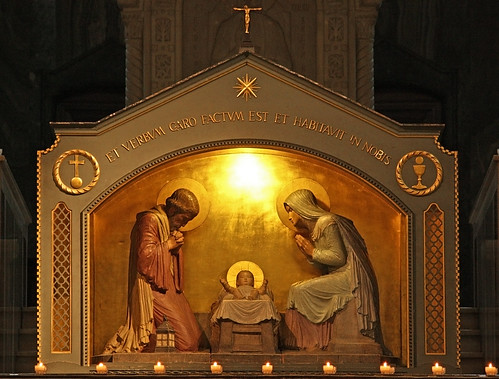
Christmas is the Christian celebration of the Nativity (birth) of Jesus Christ, who is considered the Son of God, the savior of all people, according to the Old Testament's prophecies of a Messiah (savior). Without Christ, there would be no Christianity, so Christmas is, in effect, the celebration of the beginning of Christianity as well. "Christmas" derives from "Christ" (Anointed One) and "Mass" (a religious festival). Christians have celebrated this holy day since about 400 AD. [Interesting note: Christmas is celebrated on December 25th, and many of the mental images of 'traditional' Christmas involve shepherds and the terrible cold of a winter night; however, since the events of the story take place during the census and tax collection, it is far more likely that the historical figure Jesus was actually born in March.]


The story of Christmas is based on the biblical accounts of Jesus' birth given in Matthew 1:18-Matthew 2:12 and Luke 1:26-Luke 2:40 [*Matthew 1:18 would translate to the "gospel of Matthew, chapter 1, verse 18"]. According to these gospels, Mary was visited by the angel Gabriel and told that she would give birth to the son of God. But when the child was due, Mary and her husband Joseph had to travel to the city of David (Bethlehem) to have their census taken and pay their taxes. The city was crowded with people and there was no place for them in any of the inns. According to popular tradition, Mary gave birth to Jesus in a stable, though there is no specific reference to this in any of the bible verses. [When I went to the Church of the Nativity in Bethlehem, they claimed to have proof that Jesus had in fact been born within a small cave which traditionally sheltered sheep from the weather, but was a naturally occurring shelter. The Church of the Nativity was built atop the specific cave they believe he was born in and visiting it was a fascinating experience.] Regardless, the bible does say in Luke 2:7 that Mary "wrapped him in cloths and laid him in a manger"(a manger is a trough used to hold food for animals). Shepherds from the fields around Bethlehem were told of the birth by an angel and were the first to see the child.


The idea that Jesus's birth occurred on December 25th is believed to have been theorized by Sextus Julius Africanus, a third century Christian missionary [*the earliest reference to Christmas occurring on this date is found in the Chronographai, a reference book which this missionary wrote in 221 AD]. Whether it was his intention or not, this theory allowed for the Romans to tie the Christian holiday in with their own pagan winter rituals (including Saturnalia), which made conversion to Christianity far more palatable. In 303 AD, the Christian writer Arnobius of Sicca wrote his Adversus Nationes, which belittled the idea of celebrating the birthdays of gods, suggesting that Christmas at this time was a holy day but not a feast day. The earliest reference to Christmas as a feasting day occurs in the Chronography of 354, an illuminated manuscript compiled in Rome in 354 AD - so somewhere between 303 and 354, a change occurred in the way Christians celebrated the holiday.


You only need to consider how many branches of Christianity there are in the world to imagine the variety of ways Christians celebrate Christmas: according to the World Christian Encyclopedia of 2000, global Christianity includes 33,820 denominations with 3,445,000 congregations/churches composed of 1,888 million affiliated Christians.


Eastern Christianity (the Christian churches and traditions that developed in the Balkans, Eastern Europe, Asia Minor, the Middle East, Northeastern Africa, and southern India - e.g. the Eastern Orthodox churches, the Assyrian Church of the East, the Oriental Orthodox Churches, and the Eastern Catholic Churches) traditionally combines the Nativity holiday with the Epiphany - which is a Christian feast day that occurs on January 6. Western Christianity (including the Latin Rite of the Roman Catholic Church, and the Anglican and Protestant churches) instead celebrates the two holy days separately. The Epiphany in Eastern tradition celebrates the revelation of God in human form in the person of Jesus Christ, while in Western tradition, the feast day focuses more on the visit of the magi (i.e. the "Three Wise Men" who are said to have visited Jesus after his birth, bearing gifts of gold, frankincense, and myrrh - extra points to anyone who knows what frankincense and myrrh are and more points to anyone who knows what the significance of those three gifts is without looking them up).


In the Early Middle Ages, the forty days leading up to Christmas were celebrated as the "Feast of St. Martin of Tours", which later became known as Advent. Advent is a Western Christian traditional season of preparation for the celebration of the Nativity and involves the reading of scriptures related to the first coming of Jesus as savior and the second coming as judge; many churches make advent wreaths during this season, which have one candle representing each of the four Sundays of the season. Eastern Christian tradition has their own traditional equivalent called the Nativity Fast, which begins on September 1 and differs in its observances.


Note: The above information was researched for the sake of education and appreciation, in a hope to promote cross-cultural pollination, tolerance, and peaceful understanding. If I got anything wrong or missed anything, please feel free to comment. I love to learn and I'd like this to be as factual as possible.

Finding Your Holiday Harmony

While the winter holiday season fills me with the happy, cozy comfort of being wrapped in a big fuzzy waterproof blanket in the middle of a field of snow, it can also be a very stressful time. Every year, I hear stories about people picketing stores for their use of 'Merry Christmas' rather than something more generic, and on the opposite end of the spectrum, people ridiculing the season because of its 'over-commercialization'.

Folks, please. Can't we all just get along? As I've stated previously, every winter festival and holiday that I have seen shares one common theme - togetherness. Every culture, every religion, bans together to celebrate what they, as a separate cultural group, have in common with each other. Why can't we simply expand this generous theme to include people of other backgrounds and creeds? We are all of us humans, all with the same muscles, organs, blood, and bone. We are all mortal. We are all people. Instead of trying to ban one religion or another from the mix, why not embrace (or at the very least tolerate) all of them?

Without any religious bent, the winter season is traditionally a time when we, as mortal animals, have to ban together against the dangers of a growth-less season, sharing our food, our shelter, and our company so that we all survive to the planting time. Now, today, we have supermarkets and home delivery, but I don't think there's any harm in embracing that original instinct that fueled the creation of all these festivals for all these different cultures. Love. Embrace. Welcome. Share.

Another stressor of the holiday season is shopping. Oh, gracious, going to a store in December is liable to make anyone's hair turn gray. So if you're out there with your arms full of stuff, hyperventilating and getting a pressure headache right between your eyes- Stop. Relax. What you are getting and how fast you get it are not the point. Remember what the meaning of the season is. Togetherness. This does not only apply to your togetherness with others. It means your togetherness with yourself as well. Don't fall apart.

One thing that I do not think can be denied about the human race is this: we are empathetic creatures. If we are faced with anger, we get angry; if we're faced with frustration, we get frustrated. (And we wonder why so many belief systems have ideas like 'turn the other cheek'?) Be brave! Rise against the tide of seasonal stress. Someone may shove you or yell at you because they haven't given themselves those special, solitary moments in the bustle to center and calm, but you don't have to respond in kind.

Keep yourself together so that you can be together with the people you love. They will be much happier with you as a whole than they could be with anything you might give them with your hair on end - no one wants a present from the Bride of Frankenstein.

Celebrating Kwanzaa


Kwanzaa is an African American and Pan-African holiday that focuses on the traditional African values of family, community, and culture, and is celebrated from December 26 - January 1. It is neither political nor religious, and is not meant as a substitute for any political or religious holiday.


"Kwanzaa" is derived from the phrase "matunda ya kwanza" which means "first fruits" in Swahili.


Kwanzaa was created in 1966 by Dr. Maulana Karenga, professor and chairman of Black Studies at California State University, Long Beach, as way to bring African Americans together as a community after the Watts riots in Los Angeles. Karenga founded US, a cultural organization, and began to research African harvest celebrations. In the end, he combined aspects of several different harvest celebrations.


Since it's founding, Kwanzaa has come to be celebrated by more than 18 million people worldwide. As with most holiday traditions, every family celebrates Kwanzaa in their own way. However, there are some common forms of celebration, including songs, music, dancing, storytelling, and a large traditional meal. Some celebrations also include African drums, poetry, and unity circles.


The seven days of Kwanzaa each relate to a different principle, or Nguzo Saba:
Unity (Umoja) - To strive for and maintain unity in the family, community, nation, and race.
Self-determination (Kujichagulia) - To define ourselves, name ourselves, create for ourselves, and speak for ourselves.
Collective Work and Responsibility (Ujima) - To build and maintain our community together and make our brother's and sister's problems our problems and to solve them together.
Cooperative Economics (Ujamaa) - To build and maintain our own stores, shops, and other businesses and to profit from them together.
Purpose (Nia) - To make our collective vocation the building and developing of our community in order to restore our people to their traditional greatness.
Creativity (Kuumba) - To do always as much as we can, in the way we can, in order to leave our community more beautiful and beneficial than we inherited it.
Faith (Imani) - To believe with all our heart in our people, our parents, our teachers, our leaders, and the righteousness and victory of our struggle.


On each of the seven nights, the family gathers and a child lights one of the candles of the Kinara (candleholder), then one of the seven principles is discussed.


The Kinara is the center of the Kwanzaa setting and represents the original stalk of African American and Pan-African ancestry. It can be any shape, size, or material as long as the seven candles are separate and distinct. The seven candles that are put in the kinara are called the Mishumaa Saba.


The candles are ceremonial objects used to recreate symbolically the sun's power and to provide light. The celebration of fire through candle burning occurs everywhere, in several cultures (we've already seen it in the Hanukkah post and we will see it when I get to Advent in Christianity). In the celebration of Kwanzaa, the mishumaa saba consist of three red, three green, and one black candle(s). The candles' symbolic colors come from the red, black, and green flag (bendara) that was created by Marcus Garvey. The colors also represent African gods:
Red is the color of Shango, the Yoruba god of fire, lightning, and thunder, and represents the struggle for self-determination and freedom by people of color.
Black is the people, the earth, the source of life, representing hope, creativity, and faith, and denoting a message of opening and closing doors.
Green represents the earth that sustains our lives and provides hope, divination, employment, and the fruits of the harvest.


The first night, December 26th, the black candle in the center is lit and the principle of umoja/unity is discussed. The three green candles, representing Nia, Ujima, and Imani, are placed to the right of center, and the three red candles, representing Kujichagulia, Ujamaa, and Kuumba, are placed to the left.


As with the seven days and the seven principles of Kwanzaa, there are also seven symbols. I have already mentioned the kinara and the mishumaa saba. There are also Mazao (crops such as fruit, nuts, and vegetables), Mkeka (place mat), Vibunzi (ears of corn that reflect the number of children in the household), Kikombe Cha Umoja (the unity cup), and Zawadi (gifts that are enriching).


The Zawadi gifts are meant to be made, not bought. They are symbols of creativity (kuumba) and the making of these gifts (usually exchanged between parents and children) is meant to bring as much satisfaction as the receiving of them.


The Kwanzaa Feast (Karamu) is traditionally held on December 31st and usually revolves around the seven symbols and principles of Kwanzaa.


Note: The above information was researched for the sake of education and appreciation, in a hope to promote cross-cultural pollination, tolerance, and peaceful understanding. If I got anything wrong or missed anything, please feel free to comment. I love to learn and I'd like this to be as factual as possible.

Celebrating Hanukkah


Hanukkah, or Chanukah, is an eight-day long festival of light that begins on Kisev 25 in the Jewish calendar.


Symbolically, the festival celebrates the triumph of light over darkness, purity over adulteration, and spirituality over materiality.


Historically, the festival commemorates the victory in 165 BCE of a small Jewish rebel army (consisting of two groups - a nationalist group led by Mattathias the Hasmonean and his son Judah Maccabee, and a religious group known as the Chasidim) over the Seleucids (Syrian-Greeks) who had been seeking to Hellenize them. This was a really big deal considering the Seleucid had one of the biggest, strongest armies on earth at the time and the Jews were severely outnumbered. After their success, they went to rededicate the holy Temple in Jerusalem to G_d. When they sought to light the Temple's menorah, they could only find one uncontaminated flask of oil. Even though the flask only contained enough oil for one day, the menorah miraculously burned for eight days. [Note that the festival commemorates the military victory, but celebrates the miracle of the oil: it is not a festival that glorifies war.]


At the heart of the Hanukkah festival is the nightly menorah lighting. The menorah (sometimes called chanukkiah) is a candelabra that holds nine candles: one for each night of the miracle of the oil, plus another candle called a shammus (alt. shamash), a servant or attendant candle, which is a different height. On the first night, one candle is placed at the far right. The shammus candle is lit and three berakhot (blessings) are recited. After reciting the blessings, the first candle is then lit using the shammus candle and the shammus candle is placed back in its holder. Each night, another candle is added, from left to right until, on the eighth night, all nine candles are lit (the nine plus the shammus).


Another Hanukkah tradition is the dreidel, a four sided spinning top with a Hebrew letter inscribed on each side. In Israel the letters mean "A Great Miracle Happened Here"; dreidels in other places have letters meaning "A Great Miracle Happened There". The dreidel game was made popular during the rule of Antiochus, before the Maccabees revolt - a time when soldiers could execute any Jews who were caught practicing their religion. When Jews gathered to study the Torah (the entire body of Jewish teachings consisting of the first five books of the Bible: Genesis, Exodus, Leviticus, Numbers, and Deuteronomy), they would conceal the intent of their activity by playing "gambling games" with the dreidel whenever an official, soldier, or inspector was in sight.


Customarily, dishes for the Hanukkah festival are foods that have been fried in oil. The oil once again hearkens back to the miracle of the oil. The two most common dishes are latkes, crispy fried potato pancakes, and sufganiyot (alt. sufganiot), jelly doughnuts without the hole.


Note: The above information was researched for the sake of education and appreciation, in a hope to promote cross-cultural pollination, tolerance, and peaceful understanding. If I got anything wrong or missed anything, please feel free to comment. I love to learn and I'd like this to be as factual as possible.

Celebrating Saturnalia


"Io, Saturnalia!"


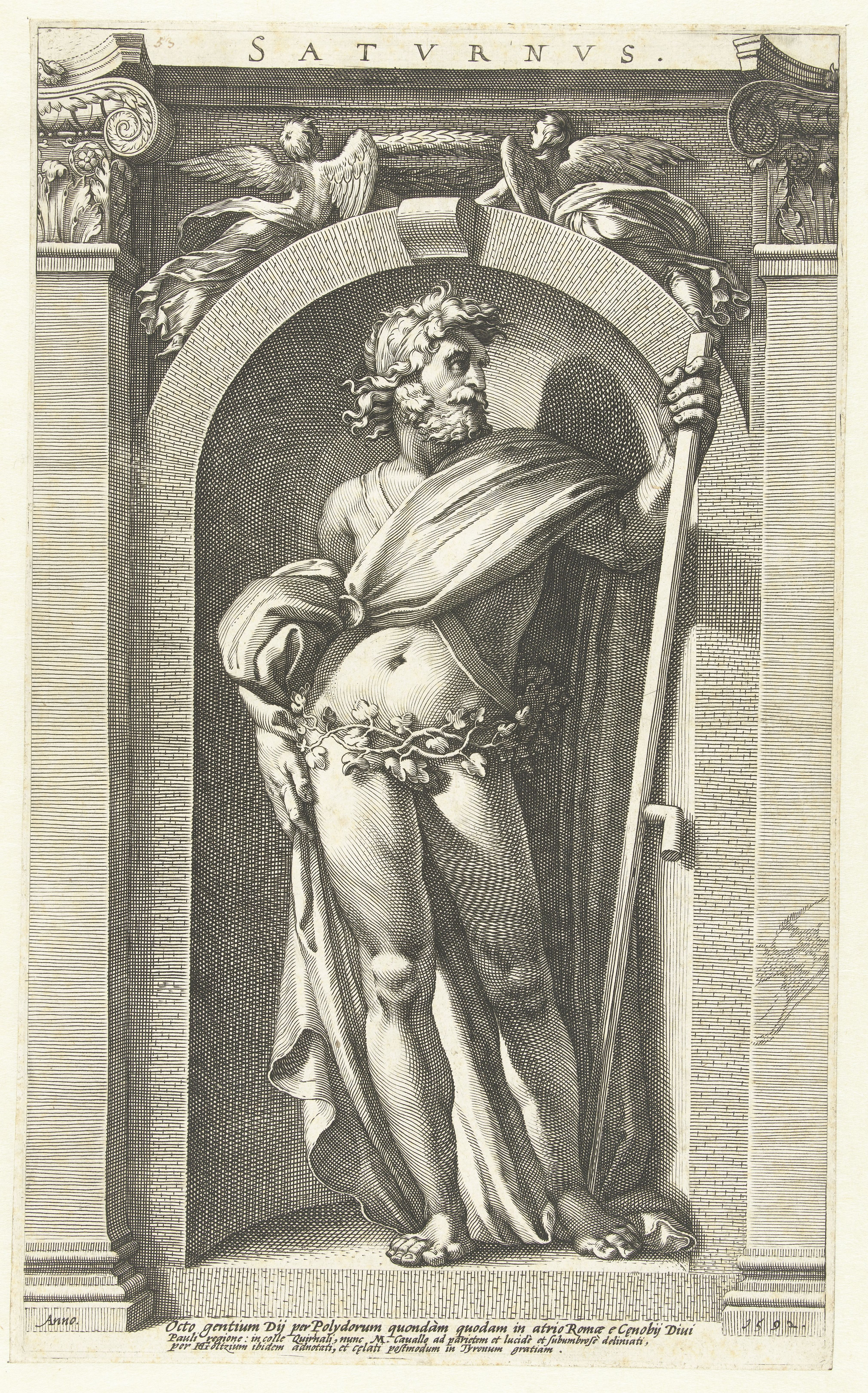
In the Roman calendar, Saturnalia was a holy day (Dec 17) on which religious rites were performed to honor Saturnus (or Saturn), the god of seed and sowing. Saturn's consort Ops, who personified abundance and fruits of the earth, was also celebrated at this time; since together they represented the produce of both the fields and the orchards, they were thought to also represent heaven and earth. Good food and good wine. Sound like any holidays you're familiar with?


Saturnalia was, in addition to a holy day, also a festival day. The Romans called it Dies Natalis Invicti Solis, the Birthday of the Unconquered Sun. After the sacrifices at the Temple of Saturn, and the prayers, there would be a public banquet and the celebrants, according Macrobius' Saturnalia, would shout "Io, Saturnalia!" riotously. The halls of houses were decked with boughs of laurel and evergreen trees. Lamps were kept burning to ward off the spirits of darkness. Schools were closed, the army rested, and no criminals were executed. Friends visited one another, bringing good-luck gifts of fruit, cakes, candles, dolls, jewellery, and incense. Temples were decorated with evergreens symbolizing life's continuity, and processions of people with masked faces danced through the streets.
Saturnalia was the most popular holiday of the Roman year, and traditionally went on for three to seventeen days (depending on the politicians in charge at the time). It was a time for celebration, visiting friends, and presenting gifts such as wax candles (cerei) and small earthenware figurines (sigillaria). They also had a tradition of decorating an outdoor tree (they did not bring the tree indoors, that was a German innovation) with symbols of stars and the sun, gilded cakes, and fertility symbols (baby shapes, and herd animal shapes such as goats and deer). They also decorated indoors with swaths, garlands, and wreaths of greenery over the windows and doors.


Restrictions were relaxed and social order inverted. Each family elected a "Lord of Misrule", a custom which was appropriated and survived through to English Christmas traditions. Slaves did not have to work and were treated as equals, allowed to wear their masters clothing and be waited on at meal time. Public gambling was allowed. Even the socially accepted standards of clothing were relaxed and people traded in their more formal togas for the more relaxed synthesis (kind of like an uncomplicated dressing gown). They also donned a hat called a pileus, a peaked woolen hat which was normally reserved for emancipated slaves, perhaps to symbolize the sense of freedom generated by the holiday.


Feasting, drunkenness, and merrymaking were all encouraged - it was a festival of fertility after all, and those three things in conjunction often lead to conception. As to the contents of the feast, here is the "Bill of Fare of a Great Roman Banquet, 63 BCE" from Macrobius' Saturnalia:
"Before the dinner proper came sea hedgehogs; fresh oysters, as many as the guests wished; large mussels; sphondyli [this Latin word has multiple meanings in the work of Apicius (a classical glutton who wrote two cookbooks before his addiction to colossal banquets drove him to bankruptcy and suicide)- sometimes it means carrots or artichokes, other times it means mussels]; field fares with asparagus; fattened fowls; oysters and mussel pasties; black and white sea acorns; sphondyli again; glycimarides; sea nettles; becaficoes [a small bird, the Black Cap; usually "pickled or marinated", according to John Locke - yes, the tradition continued]; roe ribs; boar's ribs; fowls dressed with flour; becaficoes [again]; purple shellfish of two sorts. The dinner itself consisted of sow's udder; boar's head; fish-pasties; boar-pasties; ducks; boiled teals; hares; roasted fowls; starch pastry; Pontic pastry."


Some folks have theorized that Santa's pointy red hat might have its roots in the pileus. I'd like to add this idea to the similarity discussion: they wore a dressing gown and cap ("And I in my dressing gown and cap had just settled down for a long winter's nap.")


Note: The above information was researched for the sake of education and appreciation, in a hope to promote cross-cultural pollination, tolerance, and peaceful understanding. If I got anything wrong or missed anything, please feel free to comment. I love to learn and I'd like this to be as factual as possible.

Saturday, December 12, 2009

My favorite season


It's that time of year again. The air has that delicious bite of chill that sends a shiver down my spine and a spurt of warmth into my heart. It makes me want to wear three sweaters, hunker down in my kitchen, and cook like there's no tomorrow. Everywhere I look, I am reminded of just how wonderful people can be. I am so very blessed to have good friends, old and new, and a fountain full of love to splash around in this holiday season.

Whatever your religious beliefs, is there anything more energizing and exciting than this time of year? Nature is reminding us that another year has come to a close. Now is the time to think back on everything that has passed since the last time we shivered this much; to be thankful for what we have loved and to change what has hurt us.

This is the season of Giving. Can you imagine? An entire month, from November 25th to December 25th, specifically devoted to being grateful for the gifts in our lives and repaying them by giving to others? An entire season of celebrating togetherness? How fantastic is that?

There have been several traditions at work around the winter season. To name a few:
Christmas, a story of new birth and new hope; Hanukkah, a tale of victory and faith; Bodhi Day, a celebration of enlightenment; Kwanzaa, a tribute to harvest and cultural identity; and Saturnalia, a festival of joy, gift giving, and playfulness. All positive, hopeful festivals of light and community. In a time of year that is darker and colder than any other, humans come together to celebrate the strength they have when they all work together.

Let us be kinder, let love be contagious, let forgiveness abound, let giving be a yearlong philosophy, and let dreams be immeasurable.

Happy Holidays!

Tuesday, December 1, 2009

The philosophy of HG.

I will make you a peanut butter and jelly sandwich.
I will hope that someday you might want to make me a peanut butter and jelly sandwich as well.
But I will not make the peanut butter and jelly sandwich for you because I expect you to make me one.
I will not make you a peanut butter and jelly sandwich for money.
I will not make you a peanut butter and jelly sandwich if you do not want me to make you one.
If you are allergic to peanuts, I will make you a non-peanut product peanut butter and jelly sandwich.
I will not tell you that you are going to hell for not eating my peanut butter and jelly sandwich.
If you like just jelly, that’s fine. If you like just peanut butter, more power to you!
Jam, marmalade, almond butter, sunflower seed butter. Choose your variety and I will endeavor to oblige. Your preference may teach me a whole new tasty facet of sandwich making.
I will not combine either jelly or peanut butter with the state.
I will use organic peanut butter without complaint.
I will have an indefinite amount of both peanut butter and jelly and if you ever want either or both, know that I am always willing to share them with you.