To nourish your mind as well as your body

Anger and intolerance are the enemies of correct understanding.

-Mahatma Gandhi

Showing posts with label history. Show all posts

Friday, March 16, 2012

Happy St. Patrick's Day

Hello, friends!

So it was that I received a wee request for Irish stories and recipes in honor of the coming of St. Patrick's Day. In the spirit of the coming holiday, I offer these recipes for savories, sweets, and bloody good drinks. Go on, have a peace! (And look after your heads, will ya?)

1940s Snickerdoodles - Goes great with your afternoon tea!


This guy...
 
or this guy...  
 
?


Don't forget to wear your green tomorrow! And keep an eye on this page. I'll be posting a delicious green cookie recipe later on today!

Cheers, 
Irenicineri

Friday, April 2, 2010

Easter


"-Easter; the day Jesus rose from the dead. What should we do?
-How 'bout eggs?
-...what does that have to do with Easter?
-All right, we'll hide 'em.
-I don't follow your logic...
-Don't worry; there's a bunny."
-Jim Gaffigan

Easter is one of Christianity's most important holidays, a celebration of the holy day when Jesus Christ rose from the dead after his crucifixion. It is celebrated in many different ways depending on which denomination you belong to. For me, Easter was always a day of feasting and reading the story of Christ's resurrection, and getting to run around outside in the soft green grass instead of going to Sunday School. For others, it may have included more baptisms or the Eucharist or a vigil in honor of the light that Christ brought to the world when he rose again. 

But why does it happen on a different day every year according to the cycles of the sun (it can be celebrated any day between March 25th and April 25th)? And where do the rabbits and eggs come from? To most folks, the secular version of Easter makes no sense with regards to its religious mirror. So let's take a look. 

In his book De Ratione Temporum, the Christian scholar Bede the Venerable (672-735 AD) made the first written connection between the Christian holy day Easter and the pagan Eostre. Eostre was the fertility goddess of the Saxons in Northern Europe, but she went by many names in many cultures. After all, Spring comes to everyone, except for the Martians. Heck, maybe they have their own version of it. Eostre was also known as Ostare, Ostara, Ostern, Eostra, Eostur, Eastra, Eastur, Austron, and Ausos. And all of these derive from the ancient word for "spring"-- "eastre". Fancy that. 

The pagan festival of Eostre was celebrated on or just after the Spring Equinox. [The equinox, as we all know, occurs twice a year - once in the spring and once in the fall - when the tilt of the Earth's axis is just right so that the center of the sun matches up on the same plane with the Earth's equator. The word equinox means "equal night", referring to the fact that on this day twice a year the night and day are almost equally long.] Note: the ancient Mayans also celebrated the Spring equinox, going to far as to built the massive pyramid at Chichen Itza to watch the shadow of Kukulkan descend from the sky - perhaps to bite the earth and shock it into springtime?


But back to the pagans. The celebration of Eostre was mostly about the fertility of crops and balancing out the hours of day and night; but there was a human aspect to the celebration as well. You may have heard stories about people jumping over the dying embers of a bonfire to induce fertility for young couples? This would have been when that would have happened. So where do the images of rabbits and eggs come from? Wanna take a teensy guess? I'll give you a hint - eggs are chicken babies and rabbits can start breeding at 4 months old with litter sizes between 4 and 10. *eyebrow waggle*

Now, here's another interesting little factoid. Around 200 BC, a couple centuries before Jesus' recorded birth, there are reports of a cult appearing around Rome called the "Cybele". According to Gerald Berry's "Religions of the World", this cult worshiped the Phrygian fertility goddess Cybele, whose lover Attis (potentially a version or combination of Osiris, Dionysus, or Orpheus) was the symbol of ever-reviving vegetation. He also, apparently, was born of a virgin and died and was reborn every year. The celebration of Attis occurred on the spring equinox. In fact, apparently early Christians and Cybele cultists celebrated their holy days on the same days and argued "bitterly" with each other over which of their gods was the real one and which was the impersonator. 

Now. We know what the eggs and rabbits represent, but when did the rabbit grow to human size and start painting the eggs?


The "Easter Bunny" apparently arrived in America in the 1700s thanks to some German immigrants who brought a tradition of "Osterhase". [Thank you, History.com.] The Osterhase was apparently a hare that laid colored eggs in the spring and traditionally, the children would build a nest for it. Like unto the Christmas tradition, children would sometimes even leave out carrots for the Easter Bunny in case he got peckish on his egg-laying rounds. These eggs eventually became shells filled with candies and chocolates, so apparently the Osterhase and the Cadbury bunny are cousins. 

More about eggs: The Egyptians and the Hindus believed that the world began with an enormous egg. [Which came first? The chicken or the egg? Obviously, the egg. The chickens had to evolve on the earth that came out of the egg. Did that joke fall flat?] So the use of the egg as a symbol of new life has been around since... well... for a really long time. Centuries ago, cultures were using dyes made of vegetables, edible flowers, coffee, tea, bark, leaves, and roots to tint their festival eggs different colors. In Macedonia, they would dye the egg, cover the egg in a wax design, and then bleach it leaving only the areas of the egg covered in wax colored. In the Ukraine, the eggs were dyed a simple, bright red to symbolize the blood of Christ. Also in the Ukraine, there is the ancient art of pysanky, which is an amazingly detailed designing and coloring of eggs.


Now when you think of decorated eggs, I think everyone's first thought is Faberge. These were invented by Peter Carl Faberge, a Russian jeweler, in the 1800s. These were made of gold, silver, diamonds, and rich jewels and held tiny little figures inside of them. 57 were made, but there are replicas in the same vein for sale at ridiculous prices all over. 


Interesting little historical note: according to the household accounts, Edward I of England (1239-1307) bought 450 eggs and had them gold leafed and colored in honor of Easter. We of the 20th and 21st century non-royals tend to just dunk our hard boiled eggs in food coloring. Oh, how times change. :)


If you want to watch a fun little clip about Easter and eggs, click here

[Note: None of the above pictures are mine. I Google searched them under images labeled for reuse. All the history, I have looked up either online or in books, so if anything is incorrect, it is the fault of my research and not my ignorance. Don't sue, I can't afford it.]

Wednesday, March 31, 2010

April Fool's Day

Everybody loves April Fool's Day. Personally, I love it because it's my uncle Johnny's birthday. Everybody say 'Happy birthday, Danielle's Uncle John!'

I've gotten off topic. Let me start again. Everyone mischievous loves April Fool's Day. It is the one day a year (other than Halloween) where pranking your friends, family, neighbors, and co-workers is socially accepted and even laudable. But where did this very odd holiday come from?

Well. There's no real answer to this one. Here's a few options.

In 1392, Chaucer wrote 'The Canterbury Tales'. In the 'Nun's Priest's Tale' (a tale about two foolish fools), a vain cock called Chauntecler is tricked by a fox when "March bigan thritty dayes and two" - a statement which some take to mean April 1 or March 32nd. However, most Chaucer scholars take the quote to mean 'thirty two days after March', which would, in fact, be May 2nd - the anniversary of Richard II's engagement to Anne of Bohemia. Either makes about the same amount of sense to me.

In 1508, a french poet - Eloy d'Amerval - wrote a poem entitled "Le Livre de la Deablerie"(trans. The Book of Mischief) in which Satan and Lucifer have a chat about their wickedness and laud each other on their mutual evil deeds. The poem includes the line "maquereau infame de maint homme et de mainte femme, poisson d'avril," which according to my translation means to "the man who prays is a loathesome mackerel [could be slang for pimp] and the woman who prays is an April fish." [If I got that wrong, please let me know, but that's what my internal French compass guided me to.] The term 'April fish' is the french term for 'April fool' (Don't give me that look. They call each other potatoes on the freeway!), but whether Eloy was talking about April 1st or not could be anyone's guess.

In 1539, Eduard de Dene (a Flemish writer) published a comical poem called "Refereyn vp verzendekens dach Twelck den eersten April te zyne plach." I know. I laughed too. This translates, according to the internet, to "Refrain on errand-day which is the first of April". Judging from the poem's description, it sounds more like the plot to a commedia dell'arte play than a poem, but here you are: a nobleman hatches a plan to send his servant back and forth on absurd errands on April 1st. And ends with the line "I am afraid that you are trying to make me run a fool's errand." [This information comes from the Museum of Hoaxes, if you're curious.] Whether he intended it or not, it does look like Eduard has the first solid reference to April 1st pranks in literature. Congratulations, Eddie!

There is a legend that the Duke of Lorraine and his wife used the tradition of April 1st to their advantage by disguising themselves as peasants and escaping their prison at Nantes in the guise of peasants. When people saw them and recognized them and rushed to tell the guards, the guards simply shrugged assuming this was an April Fool's joke.

The first historical note on April Fool's Day as a holiday is noted in John Aubrey's "Remains of Gentilism and Judaism", written in 1686 - "Fooles holy day. We observe it on ye first of April. And so it is kept in Germany everywhere." And so it was.

And so it is. Now if only I were better at sneaky pranks. Hmm....

Tuesday, March 16, 2010

St. Patrick's Day


Ah, Guinness Day. I mean...*cough* St. Patrick's Day. (Or "La Fheile Padraig", if you're feeling particularly Irish.) This well-known Irish holiday is celebrated on March 17th and is accompanied by a mountain of traditions that have very little to do with it's origins. When most people think of St. Patrick's Day, they think of green beer and getting pinched.

"But what's the real story?" you ask. Well. I'll tell you.

St. Patrick is the patron saint of Ireland (my favorite county, God bless them all). Patrick, born Maewyn Succat, was not Irish by birth - he was the son of a Roman-British army officer and was born in either Scotland or Roman-England. However, when he was a small child, he was kidnapped by pirates and sold into slavery in Ireland. Six years later, he began to have dreams where he saw and spoke to God. According to his autobiography - "The Confessio" - it was in these dreams that God told him how to escape on a getaway ship.

When he did escape, he went to Britain and then to France. There, he studied under the bishop of Auxerre as a monk for twelve years. He became a bishop, and soon began to have dreams that the Irish were calling him back to Ireland to tell them about God. So, with the Pope's blessing, Bishop Patricius (his Romanized name) returned to Ireland to convert the Gaelic-Irish. He journeyed the whole isle, baptizing the pagans to Catholicism and actively preaching. He established monasteries, schools, and churches. He was so successful, in fact, that he severely upset the Celtic Druids and was thrown in prison several times. Every time, he escaped.

Those are the recorded facts. Now what about the shamrocks and the snakes? What about the leprechauns??

According to legend, St. Patrick used the three-leafed shamrock to explain the concept of the Catholic Trinity (father, son, holy ghost) to the Gaels.

As for the snakes, St. Patrick apparently put the curse of God on all the venomous snakes in Ireland. This curse drove all the snakes into the sea, where they drowned.

Now. Leprechauns.

The leprechaun's name may have its origins either in the gaelic "leath bhrogan", meaning "shoe-maker" or "luacharma'n", meaning "pygmy" or "small bodied man". Either way, he is a short, cranky faerie in the Celtic tradition. Leprechauns were responsible for mending the shoes of other fairies (you can understand why they were cranky!), but they were also known for their tricks and riddles, which they used to protect their ancient treasure (gold coins and jewels left behind by the Danes when they marauded through Ireland). Honestly, St. Patrick would probably roll over in his grave to think of his very Catholic holiday being forever linked to pagan folklore.

Bishop Patricius died on March 17, AD 461 and that day has been commemorated ever since as St. Patrick's Day. Originally, the holiday was to celebrate the baptism of the Irish, however - like most holy days - it grew more secular over time. This holiday, set right in the middle of Catholic Lent (a time of repentance and prohibition), allowed the Irish a break from solemnity in which to feast and drink and dance. Actually, up to the 1970s, all that drinking and dancing had to be done at home - Irish law mandated that pubs be closed on March 17th.

In 1995, the Irish government began a national campaign to use St. Patrick's Day as an opportunity to drive tourism. Personally, I think they missed the boat a little bit on that one. St. Patrick's Day had already been an international holiday for a long time!

In 1962, city pollution-control workers used dyes to trace illegal sewage discharges and realized that their green dye could be put to a more entertaining use. That year, they poured 100 lbs of vegetable dye into the river. The Chicago River was green for a week. These days, for environmental reasons, only 40 lbs of dye are used and the river remains green only for a few hours.

Slainte! An bhfuil tu are meisce fos?


Tuesday, December 15, 2009

European Christmas Video

This is a great little video talking about European Christmas traditions and some of their roots in ancient paganism and Saturnalia. :)

Monday, December 14, 2009

Celebrating Bodhi Day


Bodhi Day is a Buddhist winter holiday - traditionally occurring on the 8th day of the 12th lunar month - that commemorates the day that Siddhartha Gautama experienced enlightenment and found the roots of suffering after sitting and meditating under a Pipul tree (ficus religiosa, a kind of fig tree which attains great size and venerable age). When Siddhartha was enlightened, he became a Buddha ("Awakened One"), finally found the answers he sought, and experienced Nirvana. 


Enlightenment in Buddhist tradition means transcending suffering and awakening to one's true nature and the true nature of all being. In Sanskrit, the word for "enlightenment" is "bodhi", which is the basis for the term "Buddha" and means "awakened".


This holiday is not as popularly celebrated as other Buddhist holidays, but it is observed in many mainstream Mahayana traditions including Zen and Shin Buddhist schools. Bodhi Day is a day of remembrance and meditation - a time to focus not only on one's own path to enlightenment, but also to consider Siddhartha's achievement of enlightenment and what this means for Buddhism today. A celebration of a transformation and the beginning of a faith - not entirely unlike the ideas behind Christian Christmas.


Historically, Siddhartha Gautama, prince of the Shakya clan, left his home and all his earthly possessions at the age of 29 to search for the Meaning of Life and to search for the reasons why people born, why they die, and why they suffer. After seven years of discipline and asceticism under the tutelage of several spiritual teachers, he still felt as though he had learned nothing. On the 8th day of the 12th month in 596 BC, he woke enlightened after 7 days of meditation beneath a Pipul tree. 


A Bodhi Day celebration can come in many varieties, depending on the Buddhist school and the cultural background of the practitioner. 


Practitioners may hang up strings of multi-colored lights to represent the many paths to enlightenment. Beginning on December 8th, they will turn on these lights every evening for thirty days. In some homes, Buddhists will have a ficus tree strung with these lights, upon which they will hang three shiny ornaments to symbolize the Three Jewels - the Buddha, the Dharma, and the Sangha.


A traditional meal of rice and milk is usually eaten on this holiday, with the significance that Sujata offered this meal to the Buddha when he awakened from his meditation to help him regain his strength. Though in recent years, some Buddhist families have made more modern amendments by making cookies in the shape of a tree to symbolize the Bodhi tree. Or they may make cookies in the shape of leaves - the leaves of the Bodhi tree are heart-shaped, so using a Valentine's Day cookie cutter works well for this.


However, the main theme of celebration comes in the form of meditation and self-reflection, and sharing Buddha's message of appreciation and compassion for others. If gifts are given, they're genuinely hand-made and given to one's teachers and spiritual influences. 


To watch a video about this  holiday, follow this link.


Note: The above information was researched for the sake of education and appreciation, in a hope to promote cross-cultural pollination, tolerance, and peaceful understanding. If I got anything wrong or missed anything, please feel free to comment. I love to learn and I'd like this to be as factual as possible.

Sunday, December 13, 2009

Celebrating Father Christmas


Father Christmas is the symbolic figure associated with the non-religious holiday of Christmas. He has many different names and guises depending on which culture you view him from, but he is typically a spirit of good cheer. Over time, he has merged with other folklore to become the character commonly known as Santa Claus. But we'll get there.

It is generally agreed that the first incarnation of Father Christmas was a real man, a Turkish man named Nicholas, who was the Bishop of Myra. Nicholas was apparently a very wealthy, very generous man, who used the whole of his very large inheritance to help the needy, the sick, and the suffering. He was exiled and imprisoned by the Roman Emperor Diocletian, who ruthlessly persecuted Christians, died December 6th, 343 AD, and was buried in his cathedral church; he was later made a saint because of his goodness and kindness. St. Nicholas is the patron saint of children and sailors.

In the eleventh and twelfth centuries, St. Nicholas' image shifted from a rather serious man who gave in secret the things which the suffering needed the most to a compassionate children's friend. Nuns in France began the practice of leaving gifts for small children of poor families on St. Nicholas Day (December 5) - usually these gifts were something to eat (e.g. apples, oranges, nuts, cookies, or sweets). This custom caught on very quickly and spread throughout Europe. The Vikings dedicated their cathedral in Greenland to St. Nicholas; Christopher Columbus named a Haitian port after him in 1492; and the Spaniards named a city in Florida St. Nicholas' Ferry (it's now Jacksonville). Everything seemed to be going quite well.

However, in the 16th century, the Protestant Reformation was in full swing in England and did not look kindly on any holiday that revered a saint. In Europe, people continued to celebrate St. Nicholas Day, leaving nuts, apples, and sweets in shoes left beside beds, on windowsills, and in front of the fireplace. Needless to say, this quite frustrated the merry-makers trapped under the Protestant thumb in England. In the 17th century, the symbolic personification of Father Christmas as a merry old figure was invented as a form of resistance to the Protestant criticism of the festival.

The earliest recorded version of Father Christmas as a rambunctious, jolly old man occurs in Ben Jonson's Christmas, his Masque, first performed at court in December 1616 and published in 1640.

"Enter Christmas, with two or three of the Guard.
He is attir'd in round Hose, long Stockings, a close Doublet, a high crownd Hat
with a Broach, a long thin beard, a Truncheon, little Ruffes, white Shoes, his
Scarffes, and Garters tyed crosse, and his Drum beaten before him.


Why Gentlemen, doe you know what you doe? ha!
would you ha'kept me out? Christmas, old Christmas?
Christmas of London, and Captaine Christmas?
Pray you let me be brought before my
Lord Chamberlaine, i'le not be answer'd else:
'tis merrie in hall when beards wag all: I ha'seene
the time you ha'wish'd for me, for a merry Christmas,
and now you ha'me; they would not let me
in: I must come another time! a good jeast, as if I could come more then
once a yeare; why, I am no dangerous person, and so I told my friends,
o'the Guard. I am old Gregorie Christmas still, and though I come out of
Popes-head-alley as good a Protestant, as any i'my Parish."


In 1638, Thomas Nabbes added to the character in his masque The Springs Glorie, in which "Christmas" appears as a revered gentleman wearing a furred gown and cap, not unlike the modern representations of Santa Claus. For the next 250 years, Father Christmas continued to appear around December as a well-nourished bearded man wearing a long, green, fur-lined robe and bursting with the spirit of good cheer.


In 1843, Charles Dickens published his novella, A Christmas Carol, with illustrations by John Leech. The above green-gowned, cheerful soul was the Ghost of Christmas Present.

Speaking of presents. It was during the Victorian Era (1837-1901) that Father Christmas, spirit of happy cheer, merged once more with St. Nicholas the gift-giver and became the Father Christmas that is synonymous with Santa Claus.

Note: The above information was researched for the sake of education and appreciation, in a hope to promote cross-cultural pollination, tolerance, and peaceful understanding. If I got anything wrong or missed anything, please feel free to comment. I love to learn and I'd like this to be as factual as possible.

Celebrating Christmas


(I am going to focus here on the religious Christian holiday of Christmas and will have another blog relating to the less religious version.)


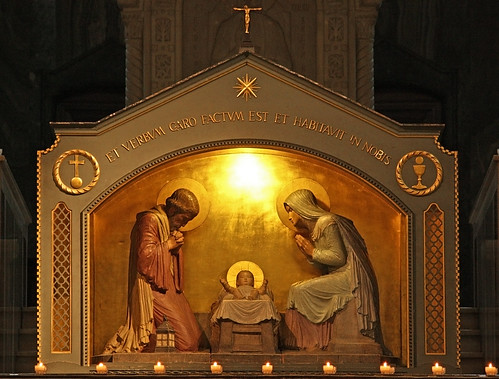
Christmas is the Christian celebration of the Nativity (birth) of Jesus Christ, who is considered the Son of God, the savior of all people, according to the Old Testament's prophecies of a Messiah (savior). Without Christ, there would be no Christianity, so Christmas is, in effect, the celebration of the beginning of Christianity as well. "Christmas" derives from "Christ" (Anointed One) and "Mass" (a religious festival). Christians have celebrated this holy day since about 400 AD. [Interesting note: Christmas is celebrated on December 25th, and many of the mental images of 'traditional' Christmas involve shepherds and the terrible cold of a winter night; however, since the events of the story take place during the census and tax collection, it is far more likely that the historical figure Jesus was actually born in March.]


The story of Christmas is based on the biblical accounts of Jesus' birth given in Matthew 1:18-Matthew 2:12 and Luke 1:26-Luke 2:40 [*Matthew 1:18 would translate to the "gospel of Matthew, chapter 1, verse 18"]. According to these gospels, Mary was visited by the angel Gabriel and told that she would give birth to the son of God. But when the child was due, Mary and her husband Joseph had to travel to the city of David (Bethlehem) to have their census taken and pay their taxes. The city was crowded with people and there was no place for them in any of the inns. According to popular tradition, Mary gave birth to Jesus in a stable, though there is no specific reference to this in any of the bible verses. [When I went to the Church of the Nativity in Bethlehem, they claimed to have proof that Jesus had in fact been born within a small cave which traditionally sheltered sheep from the weather, but was a naturally occurring shelter. The Church of the Nativity was built atop the specific cave they believe he was born in and visiting it was a fascinating experience.] Regardless, the bible does say in Luke 2:7 that Mary "wrapped him in cloths and laid him in a manger"(a manger is a trough used to hold food for animals). Shepherds from the fields around Bethlehem were told of the birth by an angel and were the first to see the child.


The idea that Jesus's birth occurred on December 25th is believed to have been theorized by Sextus Julius Africanus, a third century Christian missionary [*the earliest reference to Christmas occurring on this date is found in the Chronographai, a reference book which this missionary wrote in 221 AD]. Whether it was his intention or not, this theory allowed for the Romans to tie the Christian holiday in with their own pagan winter rituals (including Saturnalia), which made conversion to Christianity far more palatable. In 303 AD, the Christian writer Arnobius of Sicca wrote his Adversus Nationes, which belittled the idea of celebrating the birthdays of gods, suggesting that Christmas at this time was a holy day but not a feast day. The earliest reference to Christmas as a feasting day occurs in the Chronography of 354, an illuminated manuscript compiled in Rome in 354 AD - so somewhere between 303 and 354, a change occurred in the way Christians celebrated the holiday.


You only need to consider how many branches of Christianity there are in the world to imagine the variety of ways Christians celebrate Christmas: according to the World Christian Encyclopedia of 2000, global Christianity includes 33,820 denominations with 3,445,000 congregations/churches composed of 1,888 million affiliated Christians.


Eastern Christianity (the Christian churches and traditions that developed in the Balkans, Eastern Europe, Asia Minor, the Middle East, Northeastern Africa, and southern India - e.g. the Eastern Orthodox churches, the Assyrian Church of the East, the Oriental Orthodox Churches, and the Eastern Catholic Churches) traditionally combines the Nativity holiday with the Epiphany - which is a Christian feast day that occurs on January 6. Western Christianity (including the Latin Rite of the Roman Catholic Church, and the Anglican and Protestant churches) instead celebrates the two holy days separately. The Epiphany in Eastern tradition celebrates the revelation of God in human form in the person of Jesus Christ, while in Western tradition, the feast day focuses more on the visit of the magi (i.e. the "Three Wise Men" who are said to have visited Jesus after his birth, bearing gifts of gold, frankincense, and myrrh - extra points to anyone who knows what frankincense and myrrh are and more points to anyone who knows what the significance of those three gifts is without looking them up).


In the Early Middle Ages, the forty days leading up to Christmas were celebrated as the "Feast of St. Martin of Tours", which later became known as Advent. Advent is a Western Christian traditional season of preparation for the celebration of the Nativity and involves the reading of scriptures related to the first coming of Jesus as savior and the second coming as judge; many churches make advent wreaths during this season, which have one candle representing each of the four Sundays of the season. Eastern Christian tradition has their own traditional equivalent called the Nativity Fast, which begins on September 1 and differs in its observances.


Note: The above information was researched for the sake of education and appreciation, in a hope to promote cross-cultural pollination, tolerance, and peaceful understanding. If I got anything wrong or missed anything, please feel free to comment. I love to learn and I'd like this to be as factual as possible.

Celebrating Kwanzaa


Kwanzaa is an African American and Pan-African holiday that focuses on the traditional African values of family, community, and culture, and is celebrated from December 26 - January 1. It is neither political nor religious, and is not meant as a substitute for any political or religious holiday.


"Kwanzaa" is derived from the phrase "matunda ya kwanza" which means "first fruits" in Swahili.


Kwanzaa was created in 1966 by Dr. Maulana Karenga, professor and chairman of Black Studies at California State University, Long Beach, as way to bring African Americans together as a community after the Watts riots in Los Angeles. Karenga founded US, a cultural organization, and began to research African harvest celebrations. In the end, he combined aspects of several different harvest celebrations.


Since it's founding, Kwanzaa has come to be celebrated by more than 18 million people worldwide. As with most holiday traditions, every family celebrates Kwanzaa in their own way. However, there are some common forms of celebration, including songs, music, dancing, storytelling, and a large traditional meal. Some celebrations also include African drums, poetry, and unity circles.


The seven days of Kwanzaa each relate to a different principle, or Nguzo Saba:
Unity (Umoja) - To strive for and maintain unity in the family, community, nation, and race.
Self-determination (Kujichagulia) - To define ourselves, name ourselves, create for ourselves, and speak for ourselves.
Collective Work and Responsibility (Ujima) - To build and maintain our community together and make our brother's and sister's problems our problems and to solve them together.
Cooperative Economics (Ujamaa) - To build and maintain our own stores, shops, and other businesses and to profit from them together.
Purpose (Nia) - To make our collective vocation the building and developing of our community in order to restore our people to their traditional greatness.
Creativity (Kuumba) - To do always as much as we can, in the way we can, in order to leave our community more beautiful and beneficial than we inherited it.
Faith (Imani) - To believe with all our heart in our people, our parents, our teachers, our leaders, and the righteousness and victory of our struggle.


On each of the seven nights, the family gathers and a child lights one of the candles of the Kinara (candleholder), then one of the seven principles is discussed.


The Kinara is the center of the Kwanzaa setting and represents the original stalk of African American and Pan-African ancestry. It can be any shape, size, or material as long as the seven candles are separate and distinct. The seven candles that are put in the kinara are called the Mishumaa Saba.


The candles are ceremonial objects used to recreate symbolically the sun's power and to provide light. The celebration of fire through candle burning occurs everywhere, in several cultures (we've already seen it in the Hanukkah post and we will see it when I get to Advent in Christianity). In the celebration of Kwanzaa, the mishumaa saba consist of three red, three green, and one black candle(s). The candles' symbolic colors come from the red, black, and green flag (bendara) that was created by Marcus Garvey. The colors also represent African gods:
Red is the color of Shango, the Yoruba god of fire, lightning, and thunder, and represents the struggle for self-determination and freedom by people of color.
Black is the people, the earth, the source of life, representing hope, creativity, and faith, and denoting a message of opening and closing doors.
Green represents the earth that sustains our lives and provides hope, divination, employment, and the fruits of the harvest.


The first night, December 26th, the black candle in the center is lit and the principle of umoja/unity is discussed. The three green candles, representing Nia, Ujima, and Imani, are placed to the right of center, and the three red candles, representing Kujichagulia, Ujamaa, and Kuumba, are placed to the left.


As with the seven days and the seven principles of Kwanzaa, there are also seven symbols. I have already mentioned the kinara and the mishumaa saba. There are also Mazao (crops such as fruit, nuts, and vegetables), Mkeka (place mat), Vibunzi (ears of corn that reflect the number of children in the household), Kikombe Cha Umoja (the unity cup), and Zawadi (gifts that are enriching).


The Zawadi gifts are meant to be made, not bought. They are symbols of creativity (kuumba) and the making of these gifts (usually exchanged between parents and children) is meant to bring as much satisfaction as the receiving of them.


The Kwanzaa Feast (Karamu) is traditionally held on December 31st and usually revolves around the seven symbols and principles of Kwanzaa.


Note: The above information was researched for the sake of education and appreciation, in a hope to promote cross-cultural pollination, tolerance, and peaceful understanding. If I got anything wrong or missed anything, please feel free to comment. I love to learn and I'd like this to be as factual as possible.

Celebrating Hanukkah


Hanukkah, or Chanukah, is an eight-day long festival of light that begins on Kisev 25 in the Jewish calendar.


Symbolically, the festival celebrates the triumph of light over darkness, purity over adulteration, and spirituality over materiality.


Historically, the festival commemorates the victory in 165 BCE of a small Jewish rebel army (consisting of two groups - a nationalist group led by Mattathias the Hasmonean and his son Judah Maccabee, and a religious group known as the Chasidim) over the Seleucids (Syrian-Greeks) who had been seeking to Hellenize them. This was a really big deal considering the Seleucid had one of the biggest, strongest armies on earth at the time and the Jews were severely outnumbered. After their success, they went to rededicate the holy Temple in Jerusalem to G_d. When they sought to light the Temple's menorah, they could only find one uncontaminated flask of oil. Even though the flask only contained enough oil for one day, the menorah miraculously burned for eight days. [Note that the festival commemorates the military victory, but celebrates the miracle of the oil: it is not a festival that glorifies war.]


At the heart of the Hanukkah festival is the nightly menorah lighting. The menorah (sometimes called chanukkiah) is a candelabra that holds nine candles: one for each night of the miracle of the oil, plus another candle called a shammus (alt. shamash), a servant or attendant candle, which is a different height. On the first night, one candle is placed at the far right. The shammus candle is lit and three berakhot (blessings) are recited. After reciting the blessings, the first candle is then lit using the shammus candle and the shammus candle is placed back in its holder. Each night, another candle is added, from left to right until, on the eighth night, all nine candles are lit (the nine plus the shammus).


Another Hanukkah tradition is the dreidel, a four sided spinning top with a Hebrew letter inscribed on each side. In Israel the letters mean "A Great Miracle Happened Here"; dreidels in other places have letters meaning "A Great Miracle Happened There". The dreidel game was made popular during the rule of Antiochus, before the Maccabees revolt - a time when soldiers could execute any Jews who were caught practicing their religion. When Jews gathered to study the Torah (the entire body of Jewish teachings consisting of the first five books of the Bible: Genesis, Exodus, Leviticus, Numbers, and Deuteronomy), they would conceal the intent of their activity by playing "gambling games" with the dreidel whenever an official, soldier, or inspector was in sight.


Customarily, dishes for the Hanukkah festival are foods that have been fried in oil. The oil once again hearkens back to the miracle of the oil. The two most common dishes are latkes, crispy fried potato pancakes, and sufganiyot (alt. sufganiot), jelly doughnuts without the hole.


Note: The above information was researched for the sake of education and appreciation, in a hope to promote cross-cultural pollination, tolerance, and peaceful understanding. If I got anything wrong or missed anything, please feel free to comment. I love to learn and I'd like this to be as factual as possible.

Celebrating Saturnalia


"Io, Saturnalia!"


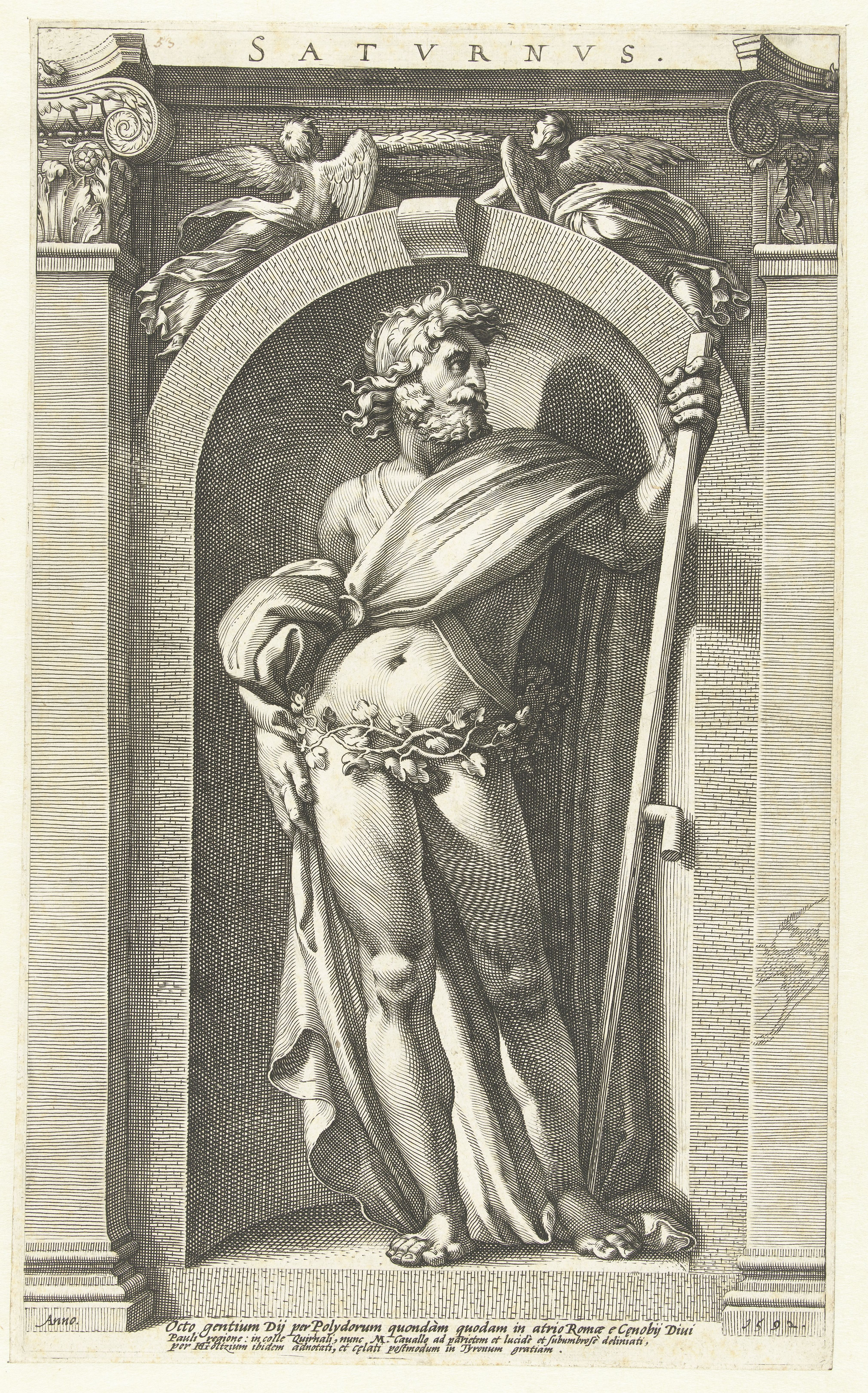
In the Roman calendar, Saturnalia was a holy day (Dec 17) on which religious rites were performed to honor Saturnus (or Saturn), the god of seed and sowing. Saturn's consort Ops, who personified abundance and fruits of the earth, was also celebrated at this time; since together they represented the produce of both the fields and the orchards, they were thought to also represent heaven and earth. Good food and good wine. Sound like any holidays you're familiar with?


Saturnalia was, in addition to a holy day, also a festival day. The Romans called it Dies Natalis Invicti Solis, the Birthday of the Unconquered Sun. After the sacrifices at the Temple of Saturn, and the prayers, there would be a public banquet and the celebrants, according Macrobius' Saturnalia, would shout "Io, Saturnalia!" riotously. The halls of houses were decked with boughs of laurel and evergreen trees. Lamps were kept burning to ward off the spirits of darkness. Schools were closed, the army rested, and no criminals were executed. Friends visited one another, bringing good-luck gifts of fruit, cakes, candles, dolls, jewellery, and incense. Temples were decorated with evergreens symbolizing life's continuity, and processions of people with masked faces danced through the streets.
Saturnalia was the most popular holiday of the Roman year, and traditionally went on for three to seventeen days (depending on the politicians in charge at the time). It was a time for celebration, visiting friends, and presenting gifts such as wax candles (cerei) and small earthenware figurines (sigillaria). They also had a tradition of decorating an outdoor tree (they did not bring the tree indoors, that was a German innovation) with symbols of stars and the sun, gilded cakes, and fertility symbols (baby shapes, and herd animal shapes such as goats and deer). They also decorated indoors with swaths, garlands, and wreaths of greenery over the windows and doors.


Restrictions were relaxed and social order inverted. Each family elected a "Lord of Misrule", a custom which was appropriated and survived through to English Christmas traditions. Slaves did not have to work and were treated as equals, allowed to wear their masters clothing and be waited on at meal time. Public gambling was allowed. Even the socially accepted standards of clothing were relaxed and people traded in their more formal togas for the more relaxed synthesis (kind of like an uncomplicated dressing gown). They also donned a hat called a pileus, a peaked woolen hat which was normally reserved for emancipated slaves, perhaps to symbolize the sense of freedom generated by the holiday.


Feasting, drunkenness, and merrymaking were all encouraged - it was a festival of fertility after all, and those three things in conjunction often lead to conception. As to the contents of the feast, here is the "Bill of Fare of a Great Roman Banquet, 63 BCE" from Macrobius' Saturnalia:
"Before the dinner proper came sea hedgehogs; fresh oysters, as many as the guests wished; large mussels; sphondyli [this Latin word has multiple meanings in the work of Apicius (a classical glutton who wrote two cookbooks before his addiction to colossal banquets drove him to bankruptcy and suicide)- sometimes it means carrots or artichokes, other times it means mussels]; field fares with asparagus; fattened fowls; oysters and mussel pasties; black and white sea acorns; sphondyli again; glycimarides; sea nettles; becaficoes [a small bird, the Black Cap; usually "pickled or marinated", according to John Locke - yes, the tradition continued]; roe ribs; boar's ribs; fowls dressed with flour; becaficoes [again]; purple shellfish of two sorts. The dinner itself consisted of sow's udder; boar's head; fish-pasties; boar-pasties; ducks; boiled teals; hares; roasted fowls; starch pastry; Pontic pastry."


Some folks have theorized that Santa's pointy red hat might have its roots in the pileus. I'd like to add this idea to the similarity discussion: they wore a dressing gown and cap ("And I in my dressing gown and cap had just settled down for a long winter's nap.")


Note: The above information was researched for the sake of education and appreciation, in a hope to promote cross-cultural pollination, tolerance, and peaceful understanding. If I got anything wrong or missed anything, please feel free to comment. I love to learn and I'd like this to be as factual as possible.